Havana Capitol Building Vector Art: Graphics & Illustrations
First Impression: Bold, Artistic, and Instantly Evocative
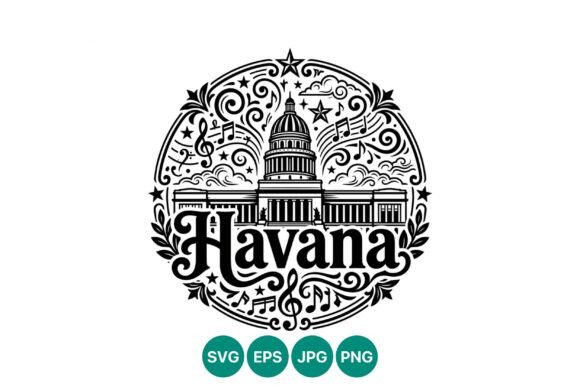
The Havana Capitol Building Vector Art lands with confident visual energy—black and white vector art centered on the iconic neoclassical dome, wrapped in a swirling circular frame of music notes, stars, clouds, and delicate floral motifs. “Havana” appears in bold, sculptural lettering at its core. It’s not minimalist—it’s expressive. Not corporate—it’s culturally rich and rhythmically alive. This graphic design asset immediately evokes Cuban heritage, artistic flair, and creative celebration. For bloggers and digital publishers, it signals editorial intention: this isn’t filler—it’s storytelling with visual weight.
Editorial Mood & Niche Fit: Where This Asset Shines
This illustration leans decisively into lifestyle, travel, culture, music education, Latinx entrepreneurship, and creative nonfiction. Its black-and-white palette feels timeless and editorially serious, while the swirling motifs add warmth and human texture—never childish, never sterile. It reads as artistic, not decorative; intentional, not generic. Think: a travel blog’s flagship guide to Havana architecture, a music educator’s downloadable lesson on Latin rhythms, or an online course on cultural branding for small business owners. It supports content that values authenticity, aesthetic cohesion, and reader engagement rooted in place and identity.
Real Publishing Uses: From Blog Headers to Digital Products
In my own editorial workflow, I’ve deployed Havana Capitol Building Vector Art across six high-impact publishing touchpoints:
- Blog featured images — especially for long-form cultural features, city guides, or heritage-focused listicles
- Pinterest pins — cropped tightly to emphasize the circular frame and bold typography for scroll-stopping clarity
- Digital guides & lead magnets — used as cover art for PDFs like “5 Hidden Gems of Old Havana” or “Latin Music History Timeline”
- Newsletter headers — scaled cleanly above email body text to reinforce brand voice before a single word is read
- Category thumbnails — consistent use across “Travel”, “Culture”, and “Creative Cities” sections builds instant visual recognition
- Canva templates — layered behind editable headline text for social media graphics, webinar slides, and affiliate content visuals
How It Elevates Content Performance
This isn’t just pretty—it’s performance-driven. Havana Capitol Building Vector Art strengthens visual hierarchy by anchoring attention to the central “Havana” typography while guiding the eye along organic swirls. That structure translates directly to stronger click-through potential on Pinterest and social feeds. Because it’s vector-based and crisply rendered, it scales flawlessly—no pixelation on retina displays or mobile previews. Readers subconsciously register that polish as credibility, boosting reader trust and brand identity. When reused across blog graphics, newsletter banners, and digital product covers, it creates consistent branding without repetition fatigue—each application feels fresh yet unmistakably part of the same visual family.
Where It Works Best (and Why)
I reserve this illustration for high-visibility, high-intent placements: hero images above long-read articles, article thumbnails in category grids, Pinterest pin covers, and editorial accents in digital guides. Its circular composition makes it ideal for social media graphics where square or circular crops dominate (Instagram posts, Facebook event covers). As a printable design or downloadable resource header, it adds gravitas to worksheets, checklists, and cultural timelines. Its contrast and clarity also make it effective as a website header for niche blogs focused on travel, music, or Latin American studies.
Where to Use With Intention
Because of its rich detail and ornamental density, avoid using Havana Capitol Building Vector Art in contexts demanding extreme simplicity: tiny mobile thumbnails (under 200px wide), text-heavy infographics where legibility suffers, or low-contrast backgrounds that mute its black-and-white impact. It’s less suited for strictly corporate, legal, or medical niches where visual restraint signals authority. Likewise, websites built around ultra-minimalist design systems may find its decorative energy visually dissonant—unless intentionally juxtaposed for contrast.
Publisher Notes: Testing, Tweaking, and Trusting the Asset
Before committing Havana Capitol Building Vector Art to live content, I run these practical checks:
- Preview it inside a real blog layout—does it hold up beside body text, headlines, and sidebar elements?
- Test readability: overlay headline text in serif, sans serif, script, and display fonts—does contrast remain strong?
- Check thumbnail performance: shrink it to 150×150px—is the “Havana” lettering still legible? Does the circular frame retain shape?
- Verify file size: vector files should be lightweight (<150KB SVG or EPS), but confirm export settings don’t bloat output
- Confirm commercial license: essential for affiliate marketing pages, paid digital products, and monetized newsletters
- Test grayscale rendering: since it’s black and white, ensure no hidden color dependencies exist in layered versions
When placed beside clean typography—like Playfair Display for headlines or Inter for body copy—it elevates rather than competes. In Canva, I often use it as a base layer, then add subtle drop shadows or soft background tints to enhance depth without sacrificing clarity.
Final Thought: A Strategic Design Asset, Not Just Decoration
Havana Capitol Building Vector Art is more than an illustration—it’s an editorial decision. It tells readers, “This content has context, care, and cultural resonance.” For digital publishers building authority in travel, music, education, or creative entrepreneurship, it’s a rare blend: distinctive enough to stand out, versatile enough to scale across platforms, and authentic enough to earn trust. Whether you’re launching a new digital guide, refreshing your content marketing visuals, or designing a creative marketplace storefront, this graphic design asset delivers measurable value—not just visual appeal. Used thoughtfully, it becomes part of your small business branding language, helping your audience remember not just what you said—but how it made them feel.