Tribal Pottery Vector Art: Graphics & Illustrations Review
I recently unzipped a new design asset for my Etsy shop, a collection called Tribal Pottery Vector Art Collection, and I’ve spent a few days testing it across mockups, cutting machines, and printable layouts. This isn’t a flashy, multi-coloured bundle. It’s a restrained, black-and-white set of six pottery illustrations that lean heavily on tribal geometric patterns. For a seller who builds products around boho, rustic, or artisanal aesthetics, this kind of graphic can either anchor a whole collection or feel too niche. I wanted to see exactly where it fits before I commit to a listing.
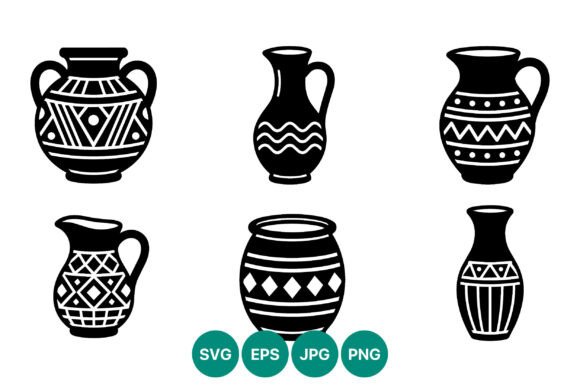
What you actually get is a ZIP folder containing six distinct vector silhouettes. Each one is a vase or jar shape, some with handles, all covered in meticulous geometric motifs. The lines are sharp, the patterns are symmetrical, and the overall feel is handmade and decorative without being folksy. The download includes SVG files, so you’re working with clean, scalable paths right out of the box. If you’ve ever struggled with auto-traced junk, you’ll appreciate the precision here.
First Impressions of the Tribal Pottery Collection
The mood is immediately earthy and grounded. These aren’t playful or cute illustrations. They carry a weight that suits premium branding, artisan market stalls, or digital products aimed at a mature, design-conscious buyer. The tribal geometry gives it a global, almost archaeological feel, while the black and white palette keeps it modern and adaptable. I could picture this on a printable wall art listing titled “Monochrome Pottery Study,” or as part of a digital paper pack for scrapbookers who love ethnic patterns. The niche appeal is strong, but it’s not for everyone. If your shop thrives on pastel nursery prints or whimsical clipart, this might feel out of place. However, if you’re targeting boho decor, Southwestern aesthetics, or minimalist ceramic-inspired art, the Tribal Pottery Vector Art Collection could become a staple.
One thing that struck me was the consistency across the six designs. The handles, the rim shapes, the density of the pattern work—it all feels like a cohesive series. That’s a huge advantage when you’re building a product bundle. You can offer a set of six coordinating prints, a mug collection, or a t-shirt series without worrying about a mismatched look. For digital product creators, that kind of visual harmony translates directly into higher perceived value and a more professional storefront.
What Sellers Can Actually Build with These Pottery Graphics
I always test an asset by asking: “How many saleable products can I spin from this single purchase?” With the Tribal Pottery Vector Art Collection, the answer turned out to be surprisingly high. The monochrome palette and vector format make it absurdly flexible. Here’s a quick list of what I’ve mocked up so far:
- Print-on-demand t-shirts and tote bags. A single large pottery illustration on a cream canvas tote looks high-end. On a black tee, the white lines read like a screen print.
- Cricut and Silhouette vinyl decals. I cut a few of the simpler vase shapes on adhesive vinyl. The geometric lines cut cleanly, though I’d advise testing the more intricate handles first.
- Printable wall art. These are begging to be printed on textured watercolor paper and framed as a set of six. I’d sell them as an instant digital download.
- Canva templates. I dropped the SVGs into a few Canva frames for social media graphics. The tribal patterns add a distinctive border or focal point without overwhelming the message.
- Greeting cards and invitations. A single pottery illustration paired with a modern serif font makes a beautiful, understated invitation suite for a rustic wedding or a pottery workshop.
- Sublimation designs. Because the vectors are solid black, you can easily recolor them in your design software. I’ve already created a terracotta version for a mug mockup.
The key is to think beyond the obvious. These aren’t just clipart filler. They can serve as the main visual element on a product. I’ve even seen similar tribal vectors used as brand identity elements for small businesses—think logo accents, packaging stamps, or website icons. If you’re building a handmade business with an artisanal vibe, this collection could inform your entire visual direction.
Where the Tribal Illustrations Perform Best
In my testing, the Tribal Pottery Vector Art Collection really shines in larger formats. The geometric details need room to breathe. I’d prioritize:
- Large product previews and mockups. A 3000px wide wall art mockup lets the intricate patterns stand out.
- Themed bundles. Pair these with other ethnic or global-inspired graphics for a cohesive “World Market” design pack.
- Decorative layouts. Use them as repeating elements in a digital paper, or as a border pattern on a blog graphic.
- Merchandise graphics. Tote bags, mugs, and even ceramic tiles (via print-on-demand) look premium with a single, bold pottery illustration.
- Social media promos. The black-and-white contrast catches the eye in a busy feed, especially when you add a pop of colour to the background.
For product mockups and thumbnail images, the strong silhouette effect is a gift. When I placed a pottery vector on a mockup of a framed print, the thumbnail looked instantly sharper and more clickable than my usual pastel offerings. The contrast creates a focal point that works well on Etsy’s small image grids. I’d recommend using a clean, light background—off-white or kraft paper texture—to let the black lines dominate.
When to Use Caution with These Designs
No asset is universal, and this one has a few quirks that sellers should watch out for. Because the patterns are intricate, some of the thinner geometric lines can become problematic when scaled down to tiny stickers or small Cricut cuts. I tested a 1-inch sticker, and the fine details began to blur. If you’re planning sticker sheets, stick to the bolder vase shapes and avoid the ones with dense, delicate motifs.
Another area to approach carefully is text-heavy templates. The busy geometric patterns can clash with small body text. I’d never use a full pottery illustration as a background behind a paragraph of text. Instead, use it as a decorative element off to the side, or as a watermark. Similarly, if you’re designing for dark backgrounds, the black outlines can disappear. You’ll need to recolor the strokes to white or a light shade, which is easy with vectors but an extra step you shouldn’t overlook.
For Cricut users, the handles and some of the internal cutouts might require a well-tested cut setting. I’d run a test cut on cardstock before committing to a vinyl batch. The SVG files are clean in my experience, but complex paths can always snag on a dull blade. I’d also recommend checking that the PNG exports (if you generate them) maintain true transparency. The black-on-transparent requirement is critical for a seamless look on product mockups.
Testing Before You Launch Your Product
As a seller, I never publish a listing without a thorough pre-flight check. Here’s the exact testing sequence I followed for the Tribal Pottery Vector Art Collection:
- Open the SVG files in Adobe Illustrator and Inkscape. Verify that paths are clean, grouped logically, and free of stray nodes.
- Export high-resolution PNGs at 300 DPI. Check for transparency around the edges of the pottery.
- Place a PNG onto a mockup—first on a white background, then on a dark background. Recolor the vector to white for the dark version and compare.
- Print a sample on matte paper and on a glossy cardstock. Ensure the fine lines don’t break up or lose detail.
- Cut the SVG on a Cricut using standard vinyl settings. Weed carefully and inspect the intricate handles.
- Create a quick Canva template using one pottery illustration as a focal point. Check how it resizes and how it sits with sample text.
- Organize the files into a customer-friendly folder structure. I include a subfolder for SVG, one for high-res PNG, and a simple PDF guide.
- Confirm the commercial licensing terms. Ensure you can sell finished products like prints, shirts, and mugs without attribution.
This might sound excessive, but when you’re selling a digital product that includes these graphics, your customers are counting on the files being ready to use. A single faulty SVG can lead to a bad review. I also test the thumbnail appearance at Etsy’s default size. The pottery shapes need to be recognizable even at 150px wide. In this case, the bold outlines pass the thumbnail test with flying colours.
Font Pairings That Elevate the Vector Art
One of the quickest ways to add value to a design bundle is to include suggested font pairings. I’ve been experimenting with the pottery vectors and a few typefaces. The tribal geometry pairs beautifully with a classic serif like Playfair Display—it adds a touch of elegance that lifts the rustic feel. For a more contemporary, gallery-like look, a clean sans serif such as Montserrat or Futura works well. If you’re aiming for a bohemian or artisanal vibe, a delicate script font like Ruthless or a handwritten font like Amatic SC can soften the bold patterns. I’ve also used a display font with a slightly weathered texture to mimic a letterpress feel, which ties in perfectly with the pottery theme.
In my own product testing, I created a simple printable art sheet with a single vase illustration, the word “Gather” in a modern serif, and a subtle border. The combination felt cohesive and sophisticated. Sellers who offer Canva templates can include these font suggestions right in the template instructions, adding perceived value without extra work.
Commercial Licensing and the Bottom Line
Before you list anything, verify the licensing. The download includes a ZIP folder with SVG files, but the commercial terms are what matter. I always check that I can use the graphic design assets on physical products, digital downloads, and print-on-demand platforms. The Tribal Pottery Vector Art Collection comes with a standard commercial license that covers most small business needs, but I’d still recommend reading the fine print. You don’t want to build a whole product line only to find out you can’t resell the designs as standalone clipart.
From a practical standpoint, this collection is a solid investment for a creative entrepreneur. It’s not a huge bundle, but the six designs are distinct enough to build a product series. The monochrome vector art is easy to recolor, adapt, and layer. I’ve already used it to create a set of six printable wall art prints, a matching tote bag line, and a few social media templates. Each product feels intentional and polished, which is exactly what you need to build customer trust and repeat sales in a crowded creative marketplace.
If your shop leans toward the rustic, tribal, or globally-inspired aesthetic, this collection will slot right in. It’s a commercial design asset that rewards careful testing and thoughtful application. I’ll be keeping it in my design toolkit for future seasonal bundles and one-off print collections.